Thursday, 24 November 2016

Philips International, The Legacy of Philip Pilevsky

When it comes to one’s legacy, few people can physically point to what they have left behind. However, for real estate developer Philip Pilevsky, this is not the case. As one of the country’s most successful real estate moguls and pioneer of the boutique hotel concept, he has created, or rather preserved, an image for himself as a protector of unique urban real estate and customer service. As CEO and owner of the Philips International Holdings Corporation, Philip Pilevsky has built a career for himself in the real estate industry that includes some of the nation’s most iconic hotels and property development projects. Along with his two sons, Michael and Seth Pilevsky, Philip Pilevsky has grown Philips International into one of the largest privately owned real estate development and property management organizations in New York City and beyond.

In a recent article on Philips International, “History, Politics, and Architecture”, Philip Pilevsky was described as “one of the most successful real estate developers of the modern age”, and this comes as no surprise to those in the industry. After graduating from New York’s Columbia University, Philip Pilevsky began his real estate career in Florida, where he started buying and quickly reselling properties that had less stringent zoning requirements. He spent years in Florida buying properties, arranging financing, and procuring tenants before returning to New York in 1974 in order to focus on retail properties, as well as many other commercial and residential investments.

In the 1980’s, Philip Pilevsky had had his eye on a number of iconic New York buildings and was developing a concept for using them. He wanted to continue to build his reputation in the real estate industry, but at the same he knew that he wanted to leave behind a legacy of honoring the city that he loved. From this motivation, Philip Pilevsky developed the concept of the boutique hotel. In contrast to chain hotels which succeed on providing customers with cookie-cutter experiences regardless of location, boutique hotels focus on two key aspects: atmosphere and customer service.

For Philips International, excellence in hotel development comes from providing one of a kind experiences and atmospheres for their guests. Boutique hotels have relatively fewer rooms and this allows for more intimate customer service. They are also designed to honor and uphold the building’s original atmosphere, preserving many of the interior and exterior design elements. This combination of customer service and atmosphere in boutique hotels has made Philip Pilevsky one of the most respected real estate developers in the country.

Friday, 7 October 2016

Philips International, Managing New York’s Skyline

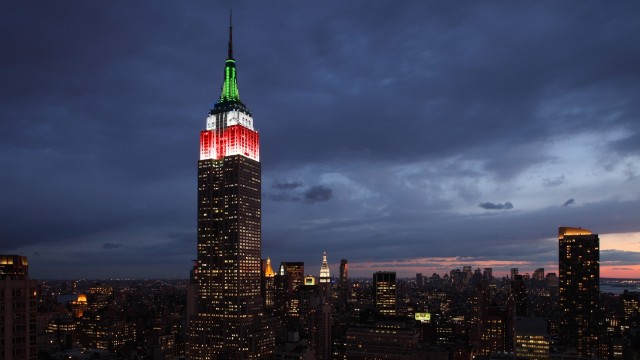
When we conjure images of iconic American landmarks, we call to mind things like the Statue of Liberty, the Grand Canyon, the Empire State building, and the Golden Gate Bridge. From coast to coast, many natural and artificial landmarks act as symbols of American prosperity, strength, and beauty. Even in dark times of American history, these landmarks have stood as representations of the American spirit and dream. It was during the Great Depression, in fact, that America built arguable its most prominent landmark building: the Empire State Building. The Empire State Building was built as a sign to the American people that despite hard times, the nation was still strong and still fighting for its future. Still among the tallest buildings in New York, it remains an eternal symbol of the New York City skyline.


Recently, the owner of the Empire State Building, Malkin Holdings, recently announced that they were seeking to fold the building into a real estate investment trust (REIT), called the Empire State Realty Trust. Comprise of more than seventeen New York properties, the announcement of the Empire State Realty Trust created a massive uproar of excitement with New York’s real estate developers. In terms of business, the Empire State building offers not only a vast amount of office space, but also generates more than $85 million annually with over 3.6 million tourist visits to one of the buildings two observation decks. 

Tourism aside, the building still stands as an important potential revenue generator. The building’s tourism revenue may already be at its peak, but substantial revenue will come from the building’s office leases once renovations are complete on the building’s interior. Additionally, the building holds potential retail space. For developers such as Philip Pilevsky of Philip International, a real estate development and management firm, this opportunity is exciting for a number of reasons. It is a chance to be involved in the management of one of our country’s most iconic landmarks, in addition to being a sound business decision.

That is why Philip Pilevsky partnered with Joseph Tabak in June of 2013 and announced a $2.1 billion offer for the iconic tower with plans hinging on the retail aspect of the tower’s retail and commercial space, including a hotel. The duo plans to develop a hotel in the 102-story building and convert the base into a destination retail hub with the financial backing of long-time investors. Despite this huge interest, Malkin Holdings decided against releasing the Empire State Building at the time. It could be up for grabs in the near future, but for the time being the iconic landmark remains unchanged in the New York cityscape.

Philips International, The Future of the Empire State Building


If asked to name the most iconic buildings in our nation, chances are the Empire State Building is going to be in the top three somewhere. That is why in 2007 it was ranked number one on the AIA’s List of America’s Favorite Architecture. Not only is it a strong symbol for New York City, it is a national icon and until recently, the United States’ largest tower. Inside the building are more than one thousand commercial businesses, retail stores, broadcast stations, observation decks, and approximately 21,000 employees. There are two observation decks on the building, which generate more than $85 million annually with over 3.6 million tourist visits. In short, the Empire State Building is one of the most important structures in our nation and it embodies the strength and history of the American people.

But what about the future of the Empire State Building? Is the building, having been built during the Great Depression, now outdated and in the background? For some it may be. Originally the tower represented a largely blue-collar symbolism. The plaques in the building’s lobby read “Steel,” Plumbing,” and “Masonry.” Nowadays, it is mostly a white-collar place of business and tourism. With revenue from the millions of tourists visiting the observation decks every year, the potential for renting office space, and the historical significance of the building, the Empire State Building is a real estate developers dream come true. The building is currently owned by Empire State Realty Trust, of which Anthony Malkin serves as Chairman, CEO, and President. Recently, Malkin Holdings entertained the idea of passing ownership on to another, and this move had real estate developers in an uproar over who might make a bid.

Philips International, one of New Yorks leading real estate developers and property managers, decided to make a bid. Led by Owner, Founder and CEO, Philip Pilevsky the company recognized the potential that the building held for property leasing as well as its historical significance for the city. Having acquire, developed, and management multiple historic buildings in New York City, the real estate firm was excited at the opportunity to participate in the history of such an iconic building. In partnership with Joseph Tabak, Philip Pilevsky made a $2.1 billion dollar offer on the Empire State Building.

In the end, Malkin Holdings was unable to let go of the building and continues to own and manage it to this day. In the future, however, the Empire State Realty Trust will need to search for investors with a strong connection to New York City’s past.

Philips International, Atmosphere And Hotel Management

There is nothing more important to a hotel experience than the atmosphere that the building creates for its guests. People traveling for work need to feel that their room is a comfortable and inviting place for down time. People on vacation want an atmosphere that will transport them out of their daily lives for a short period of time. Hotel décor and overall design are crucial in creating this atmosphere, which is why architects and interior designers work hard to make sure that all details works together in order to create a unique environment and experience. 
Philips International, based in New York City, is a real estate management and development company established in 1979 by Philip Pilevsky. They have countrywide operations, providing some of the most luxurious accommodations and unique room design. In fact, their focus on aesthetic and customer service is what led them to develop the concept of “boutique hotels” in the 1980’s. Boutique hotels are a style of accommodation that distinguishes itself from larger chain or branded hotels by providing guests with ultra-personalized service and care, beyond what chain hotels even attempt to provide. They are typically very stylized, with a smaller number of rooms and smaller staff to ensure that every guest can have a personal interaction with any staff members.

When it comes to boutique hotels, Philips International is most famous for their avant-garde design. When it comes to both choosing a development and creating the design elements, Philips International focuses on customizing their décor in order to give each of their boutique hotels a personalized feel. They have a propensity for taking under-appreciated properties and transforming them into modern, stylish accommodation. Take the Andrew Hotel in Great Neck. With sixty-one rooms, the Andrew Hotel has become a symbol for minimalist design in the New York area. They incorporate luxurious materials such as mohair, marble, oak, and silk, which gives the Andrew Hotel both a modern feel, as well as a cozy one. With great proximity to shopping and other amenities, the Philips International’s Andrew Hotel is a great example of the potential in boutique design.

The brilliance of the Philips International aesthetic comes from founder and CEO Philip Pilevsky. He has decades of experience in the New York and national real estate scene. He specializes in the acquisition, development, and management of both residential and commercial properties. Under his guidance, Philips International has cornered the market on top-quality boutique hotel design and service.

Monday, 12 September 2016

Philips International, A Leader in Hotel Development

When people think of New York City, their minds immediately conjure up images of its impressive skyline, shaped by iconic structures such as the Empire State Building, the Chrysler Building, and more recently, the One World Trade Center. However, the city that never sleeps has another groundbreaking building in its midst whose unique construction and decorative design has made it a staple of New York’s concrete jungle since its completion in 1924. Not too far from the Empire State Building stands this neo-Gothic tower shrouded in black and gold: the American Radiator Building.

Since its inception, the American Radiator Building has been owned by several high-profile property developers, including Philips International. Yet, its beginnings are fairly humble. In 1922, Raymond W. Hood, who at 41 years old had not accomplished much in his design career, was pushed by his colleague John Mead Howells to enter a design competition for the anticipated Chicago Tribune building. Inspired by the neo-Gothic structures he knew through working for Cram, Good hue Ferguson, Hood submitted a original and innovative neo-Gothic tower design that won the commission. Suddenly, Hood was known all over New York, and within a year, he was designing the American Radiator Company’s headquarters on West 40th Street across from Bryant Park.

The building’s neo-Gothic ornamentation combined with the overall sleek geometric lines anticipated the Art Deco craze that would soon envelop Manhattan architecture. The black brick with gold accents solidified the structure as one of the most daring experiments in color in modern buildings in America. The American Radiator Building was also the first New York skyscraper with dramatic exterior lighting. In 1988, the building was sold to Japanese company Clio Biz, who planned on converting it into a hotel. However, the building sat empty for a decade until Philip Pilevsky of Philips International purchased it in 1998 for $15 million. Finishing what Clio Biz had never started, Pilevsky started the building’s conversion into the Bryant Park Hotel.

Pilevsky brought in many design experts to turn the building into one of New York’s most exclusive and luxurious hotels, including British designer and architect David Chipperfield, who had also designed fixtures for American Standard. Chipperfield’s unique vision brought the visitor from the 1920s outside to the 60s-inspired 21st Century inside with bright colors and vibrant designs. He placed burgundy leather walls in the lobby area, and custom-designed many of the high-end details and fixtures in the space, including a vaulted-ceilinged cavern house the Cellar Bar and a restaurant below the lobby level.

Friday, 9 September 2016

Philips International – A Legacy of Excellence in Real Estate Practices

Philip Pilevsky is one of the biggest names in real estate – an impressive feat when your area of expertise is New York City. A graduate of Columba University, where he received his MA in education and political science, Pilevsky is currently the founder, chairman, and CEO of Philips International, an esteemed position he has held for almost four decades. Philips International is one of the largest privately owned real estate development and property management organizations in New York.

As its head leader, Pilevsky oversees all aspects of ownership, development, sales, acquisitions, leasing, and property management for over 200 properties that include retail shopping centers, commercial office buildings, residential properties, hotels, commercial condominiums, and residential cooperatives throughout the United States. Because of Pilevsky’s unmatched experience in the areas of residential and commercial real estate, the company has continued to grow steadily since 1979, seeking opportunities across the country and committing itself to building strong relationships and innovative ideas.

Like all successful businessman, however, Philip Pilevsky has evolved over the years. In the mid-80s, much of Pilevsky’s revenue came from his uncanny abilities as a flipper, or a real estate dealer who sings a contract to buy a property and sells the contract before he takes title to the property. As the 38-year-old president of Philips International, Pilevsky freely conceded that his ability to invest millions of dollars of his own capital into his projects was due to successful flipping over the previous decade. But in 1984, Pilevsky began moving away from his reputation as a flipper, and instead started focusing on building his portfolio as an investor.

At that time, Pilevsky said he had about $400 million worth of property, including large-scale development projects including the recently completed River Hotel on Christopher Street in the West Village, and the new 28-unit condominium under construction on the Avenue of the Americas between Waverly Place and Washington Place in Greenwich Village. His endeavors have clearly defined him as an entrepreneur in the real estate world.

Pilevsky’s strategy has also been unique. Starting out as a land dealer in Florida, Pilevsky later moved to Orlando where he found he could resell land that had been mapped for development in the 1920s. He returned to New York in 1974, where he obtained a broker’s license and began building small shopping centers in Brooklyn, Queens, and Staten Island. When it comes to buying property, Pilevsky said he always avoids ‘pyramiding,’ meaning each of his projects is independent of the others.